Opening a Fitness Facility

This entry was posted on February 22, 2010 by Mike Robertson. It was tagged with Q&A.

Under Construction Under Construction

Below is a Q&A response that I wanted to post up.  Hopefully it will help those of you out who are hoping to open your own gym/fitness facility someday!

Hi Mike,
 
I really enjoy reading your level headed and erudite advice on your newsletter, Fitcast, Mens Health, etc.
 
I am an aspiring entrepreneur, not unlike yourself, and looking into starting up a gym in the XYZ area. I am emailing you to see if you have any advice to get me started in the right direction, specifically:
 
1) What resources did you utilize when doing market research for your gym?
2) What mistakes did you make in the planning process that would be easily avoidable?
3) Any resources I need to be looking at regarding starting a gym?
 
I really appreciate any time you could give me, if only to simply point in the right direction.
 

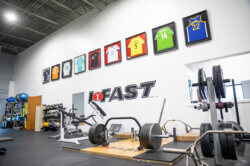
1 - Here are the things Bill and I looked for when opening our gym:

  • Price per square foot (PPSF)

    You could go a few hundred feet towards the primary road in our area and literally triple your PPSF. We didn't need visibility, as we're not your typically "drive-by and join" gym.
  • Travel Location

    We wanted to be near major intersections and highways.  This was critical, as it would get people to and from our gym faster.  I think the general rule of thumb is people are willing to drive about 20 minutes max to go to your gym.
  • General Location

    This jumps off the previous point.  If people are only going to drive 20 minutes to see you, you don't want to be in a horrible part of town.  We're in a fairly centralized location that's not only easily accessible, but right in between several affluent communities.
  • Competition

    I'm assuming you also want to know how we scoped out competition.  In all honesty, I didn't care who was around us.  Bill and I know what we're capable of, and what we bring to the table.  I think other fitness facilites will have to plan around us, versus the other way around.  We're in a unique demographic, have a higher price point, and offer much more customized services than anywhere else near us.

    (Yes, I realize this may sound a little arrogant, but I feel we're the best place in our area.)


2 - As far as planning goes, I'm not so sure we made major mistakes.  Instead, what was more evident was that we simply hadn't run a business before!

The training/assessment side is actually easy for us in the grand scheme, because Bill and I are both technicians versus managers or entrepreneurs.  The hardest part for us is on the repeatability/systems side of things.  If you haven't picked up the E-myth yet, I would do it immediately.  Too many of us are technicians for life, and we wonder why our gyms fail.


3 - I would start off with the E-myth, as well as attending a Cosgrove Business seminar or mentorship.  I'm actually heading to one this weekend, as I know it will take IFAST to the next level.


4 - You didn't ask a fourth question, but I'm going to give you a piece of advice that has really paid dividends for me.

I have tried a lot of direct marketing stuff, and not really seen the result.  This is costly in two ways - first off, I'm spending money and not seeing a return.  Second, I was designing a lot of the stuff up front as well.  So I was wasting time and money (yes, I'm sure AC is having a fit as he reads this.  It's just my experience up this point.)

That said, we've had a huge ROI from our website, Facebook pages, etc.  The book Guerilla Marketing talks about all the things you can do for free to promote your business, and it's even more true now than ever before.  There are so many platforms out there to help you promote your business, you absolutely must take advantage of them.

Build a blog.

Create a Facebook fan page.

Start a Twitter account.

Anything you can do to generate interest and "buzz" will help you build your brand, and therefore your business.

That's not to say I've given up one direct marketing, as I haven't.  I just have to become more disciplined and focused to really make it work.  In the beginning, however, you can save a lot of cash and still develop a ton of momentum without breaking the bank on marketing.

I hope that helps.  Good luck!

MR


Comments (7)

Reverse Hypers versus Glute Hams

This entry was posted on February 01, 2010 by Mike Robertson. It was tagged with Q&A.

Glute-Ham Raise Glute-Ham Raise

Hi Mike,

Certainly enjoy your article content and very much the Podcasts. 

I am a new gym owner and have considered purchasing either (but not both) a GHR or a Reverse Hyper from Elite FTS.  I am convinced that the posterior chain must be developed in all athletes for many reasons of injury prevention and performance.  I use the SL/DL deadlifts as a staple in my programs to enhance knee health and accel/decel performance. 

Just would like your take on the equipment.

Thanks again....

This is a great question, and before I would answer it, let's take a quick second to examine the differences in function between the two.

Reverse hypers train hip extension with a straight leg.  Therefore, the primary emphasis here is on the gluteals.

The glute-ham raise, on the other hand, trains the knee flexion component of the hamstrings. Outside of  ball leg curls, I'm not sure of many ways to train this without resorting to the leg curl machine!

As I mentioned in my previous blog examining the differences between Leg Curls and glute-hams, GHR's also train the core/glutes to stabilize the pelvis if performed correctly.

But as a gym owner, I always look at one thing:  Total value.  What piece of equipment are you going to get the most use/mileage out of?

With a reverse hyper, you're somewhat limited.  In essence, all you can do with a reverse hyper is reverse hypers!

On the other hand, a glute-ham can allow you to perform any or all of the following exercises:

-       Glute ham raises

-       Back extensions (an alternative straight-leg hip extension exercise)

-       Static back extensions/side bridges, etc.

I guess I feel that a glute-ham raise would be the better overall value - for a cheaper price, you can get more movements out of it.

That's not to say that a reverse hyper isn't a great tool.  In fact, I wrote about it extensively HERE.  I just feel that a glute-ham raise gets you more for your dollar, and as a new gym owner, I hope that's something you care a lot about!

I hope this helps.  Thanks!

MR


Comments (3)

Q&A: Stretching Modalities

This entry was posted on January 11, 2010 by Mike Robertson. It was tagged with Q&A.

Static Stretching Static Stretching

Do you still feel static stretching is the best type of stretching over passive, dynamic, AIS, etc?

The question of stretching methods comes up often; so I figured this was something that would be well received within a blog post.

I think one of the issues that we see is that people get too focused on one specific type of stretching, versus using all the possible stretching methods available to us. For instance, blindly saying that static stretching is good only tells part of the equation.

I use static stretching.

I use dynamic stretching.

I use eccentric quasi-isometrics.

I use long duration, low load stretches.

We spend so much time talking about stretching as a whole, but we really need to be discussing is the appropriate timing and the appropriate type.

Static stretching can be used at both ends of the spectrum.  Someone that is seeking improved mobility could actually static stretch before and after his or her training session.

In contrast, someone who was looking to maximize strength and power gains would static stretch at other times throughout the day, and would minimize pre-workout static stretching.

As a general rule of thumb, I typically use dynamic stretching pre-workout, static stretching either post workout or later in the day (such as right before bed), and eccentric quasi-isometrics are typically used immediately post workout.

Obviously, there are exceptions to these rules, but for the large majority of the population this works quite well.  If you are looking for more info, consider picking up a copy of the Indy Seminar Series, as Bill has an entire discussion on not only the various types of stretching we use, but how to use the right type at the right time.

I hope this gives you clear insight as to how we use all the various modes of stretching here at IFAST.  Thanks for the question!

Stay strong

Mike

Comments (3)

Q&A: Assess and Correct

This entry was posted on January 07, 2010 by Mike Robertson. It was tagged with Q&A.

Assess and Correct Assess and Correct

I am using Assess and Correct and have been happy with the program.

At least to my knowledge, it doesn't seem as if the program clearly states how often we should be doing the corrective exercises. After doing the assessment, I made a list of corrective progressions I needed and now do them before my lift.

As I am doing a four-day-a-week upper/ lower body split, I do the upper body exercises as the warm-up on my upper body days (2x a week) and the lower body exercises as the warm-up on my lower body days (2x a week).

Is that frequency sufficient?

Thanks for the question regarding Assess and Correct. While the program is mainly developed for pre-workout training, it can obviously be used throughout the day, or on non-training days to get even better results.

For example, many of the clients and athletes I work with have severe mobility or activation issues. In this case, I may have them performing exercises literally every day to ensure that they're getting the most out of them.

The question then becomes: how much is enough for you? If your mobility is very poor, or activation levels of certain muscles are very poor, then is something I would recommend doing every single day.

If you're moving quite well, however, doing the routine as you suggested should be more than adequate.

As coach Dan John would say, "If it's important, do it everyday." I will often err on the side of too much mobility or activation work, versus two little. Many of us sit for extended periods throughout the day, and as such need a little bit more maintenance work.

I sincerely hope this answers your question. Good luck with the program, and make sure to keep us posted on how it's working out for!

Stay strong

Mike

Comments (4)

Blog Archive

Feeling old-school? Check out the old Blogspot!