The Tabata Myth

The Tabata Protocol

Note from MR: Mark Young is one of my favorite fitness guys.  He’s well-read, looks at everything with a critical eye, and perhaps most importantly, he’s willing to speak his mind.

I think you’re really going to enjoy the piece below.  Enjoy!

——————————-

With all of the talk about interval training for fat loss in recent years it was only a matter of time before someone stumbled across the 1996 study by Dr. Izumi Tabata and his colleagues.  In fact, this study created such a rage that now hundreds of thousands of trainees around the world now include “Tabatas” as part of their fat loss programming.

Unfortunately, there are two fatal mistakes made by those using these protocols and I hope to identify and dispel the myth of the Tabatas once and for all.

Mistake #1: You’re NOT doing the Tabata protocol.

Despite the widespread use of this system, most people have absolutely no idea what the actual Tabata protocol is.  In the often cited (but rarely actually read) study, one group performed moderate intensity (70% VO2 Max) steady state cardiovascular exercise for one hour on 5 days per week.  This would be along the lines of what most people would be accustomed to doing in the gym.

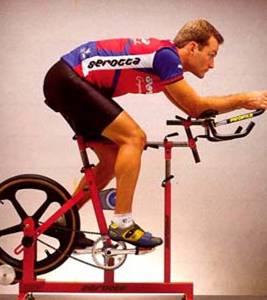
The other group used the Tabata protocol which consisted of a 10 minute steady state warm up followed by 7-8 sets of 20 seconds at 170% VO2 Max on a mechanically braked cycle ergometer.  Subjects were given 10 seconds of rest between each set.

One more interesting part?  On 4 days of the week the Tabata group performed this exact protocol.  On the fifth day they actually did 30 minutes of steady state exercise at 70% VO2 Max followed by 4 Tabata style intervals.

So over the course of a week the Tabata group also did a total of 70 minutes of steady state exercise as well!

But here is where most people mess up.  VO2 Max is determined (in this case) by having the person ride the ergometer while measuring their oxygen uptake and gradually increasing the wattage until the person’s oxygen uptake no longer continues to rise.  This is considered 100% of their VO2 Max and it is often associated with complete exhaustion and/or vomiting.

Now imagine increasing the resistance on the bicycle to increase the wattage to 170% of that value.  That is the intensity required for a true Tabata interval.  Each interval is completed with maximal effort.

Despite what you’ve been told, front squats, resistance bands, or any other bodyweight routine you might be doing may replicate the time sequence of the Tabata protocol, but it is NOT a Tabata interval.  If your first set is performed at a submaximal weight that becomes maximal by the final set this does not even come close.  It might be hard, but it isn’t a Tabata.

Mistake #2: Tabatas have not been shown to be more effective for fat loss than any other type of circuit training.

In fact, the Tabata protocol has not even been tested for fat loss at all.  In neither of the studies done on this protocol was fat loss even measured.  This protocol was created for performance, and the primary outcome measures were predominantly looking at aerobic and anaerobic fitness.  Someone simply took these studies to mean something that they didn’t say.

Is it possible that the Tabata protocol is better than other fat loss protocols?  Sure.

Is it possible that it is equally effective?  Of course.

But with those two possibilities comes the other possibility that the Tabata protocol is not as effective as any other protocol whether it is circuit training or steady state exercise.  And that would be assuming that you are indeed performing the Tabata protocol as it was originally described which most people certainly aren’t.

In the end, if you’re looking for something different to throw into your routine go ahead and do a 20 second interval with 10 seconds rest, but DON’T call it a Tabata because it isn’t.

And don’t put all your eggs in one basket.  Make sure you include other types of metabolic work as well.  Even the authors did that.

——————————-

Mark Young is an exercise and nutrition consultant from Hamilton, Ontario, Canada.  You can check out his website and subscribe to his newsletter at www.markyoungtrainingsystems.com

 
click here

Related Posts

No related posts.

This entry was posted in Energy Systems, Fat Loss, Guest Posts and tagged , . Bookmark the permalink.

15 Responses to The Tabata Myth

  1. Gregg Swanson says:

    WOW Mike! Thanks so much for speaking up about this! I’ve been frustrated with the same thing and people just weren’t getting it. When I first heard about Tabata’s I did look up and read the report. Sure it makes sense to use this protocol, but in reality all people are doing is HIIT.
    Thanks again for shining a light on this misperception.

  2. Nick Tumminello says:

    Great article Mark – this was very eye opening for me and many others I'm sure!
    I still will continue to do Tabatas as I've done because it's a simple to understand, easy to follow and versatile method to get clients to perform high-intensity interval training.
    Plus, the positive effects I've seen in the gym from the Tabata protocols I use are undeniable!
    Keep up the great work Mark and Mike R!

  3. Bryan Smith says:

    Mark,
    Interesting article. TABATA, HIIT, rest based interval training, whatever you want to call it, it is very effective. I started doing this style of training last year and had incredible results. I dropped down from 260 lbs to around 190 lbs. Now, I am sure diet had a lot to do with it as well, but I was burning somewhere between 800 to 1000 calories. I did most of mine on a treadmill and also sprinting outside. I preferred the treadmill because it pushed me harder than I could push myself. I would set the treadmill anywhere from 9 mph to 11 mph and sprint for the allotted time and then step to the side for the rest, because it was impossible to speed up and slow down the treadmill for the short rest intervals workouts. I did a few different types of intervals, a 6/9, 10/20, and the longest was a 20/40.
    Although, I will say that while I had huge success with this in the first part the results slowed and then eventually stopped, which is when I took a break from HIIT and switched to more steady state.
    Unfortunately, I cannot tell you how much fat loss actually occurred, because I did not know my BF% when I started. However, I can tell you I went through several clothes size changes and changed how my body composition looked drastically.
    Thanks,
    Bryan

  4. tabata says:

    muito legal

  5. John Dickey says:

    Here is a free timer for Android phones. You can save several timers to meet your needs.

    https://market.android.com/details?id=com.jpd0861.motivator&feature=search_result

    Enjoy.

  6. Thrasheri says:

    Nice article. I do “tabatas” occasionally. After this article im not sure if i can call them tabatas anymore :) Anyhow i created software for all as tabata enthusiasts. check it out at Tabata timer for pc version. Android- version is located at :
    tabata timer android

  7. Gary Davidson says:

    Great post! I generally just do all out sprints for my Tabata workouts. I added these about 4 months ago to my workout, without changing much else and I dropped 12 lbs. I like seeing improved distance during the sprint time. It’s motivating for me.

    I use music from TabataSongs.com. All their songs are on iTunes. Best stuff I have found yet.

  8. Good article Mark.

    Yep, people have been ripping on others for awhile now for using “Tabatas” as we now know (as Mark pointed out) that the vast majority are not doing true Tabatas. But here’s what annoys me; I’ve heard a lot of people say, ~ “those aren’t true Tabatas, so I’m no longer using the 20/10 protocol. This protocol has never been proven to be effective. Those that are still using 20/10 are dumb.” (or something like that :) )

    I hate that mind-set!!! Just because they aren’t true Tabatas it doesn’t mean that you can’t incorporate 20 on 10 off from time to time! Sheesh!!!

    Danny

  9. Oh, and BTW Mark, I’m NOT saying that you are in that category of people saying 20/10 is worthless. :)

    Danny

  10. David Rapant says:

    Part of the problem is that you have people doing what people always do. You tell them that you can exercise for 20 sec and rest for ten. Than do it again a few times and your good. The truth is, people rarely do what is required, so you have people doing a few pushups in the time alloted and they call it good. The key to this type of training is maximal effort. You do as many pushups as you can possibly do in the 20 sec, then rest for 10, which if your doing this even close to the intensity required is no rest at all. Its just barely long enough to get ready to do it again, or get in position for the next exercise. I do these intervals and the 18 minutes required to get through an entire 8 rounds at maximal effort I can safely say that I’m am doing what is required. I have never increased my cardiovascular conditioning faster than with this protocol. Call it what you want to, it works, but it only works at maximal effort. I guess that may mean different things to different people. If your not completely spent and lying on the floor completely out of breath and sweating like slave, you probably aren’t doing this correctly. The beauty of it is that it never gets easier, because it each time you do it, your putting in maximal effort. If its getting any easier at all its time to switch up exercises. People will always try to over simplify or try to get something for nothing. If your doing this even close to right, most people will move on to something easier like walking on a treadmill while reading a book. Whatever. If you can read while your working out, why bother doing it at all. your fooling yourself. As for me, I’ll keep doing what I’m doing cause it’s helped me get in the best shape of my life. I also do crossfit, which is more than most people are willing to do either, but it also works, and its fun!

  11. cedric says:

    I do agree. One of the biggest problem is people keeping the Tabata part of 20/10s for 4mn, but forgetting the 170% of VO2max effort! Tell me how you can get such an intensity with push-ups or crunches…

  12. Gary says:

    Tabata is a foundational study and one of the primary resources for considering and including HIIT as part of an athletic or fitness program. Here is a link to an update of additional benefits to interval training by Gibala MJ, Little JP, Macdonald MJ, and Hawley JA. who are also leading HIIT researchers.

  13. Rich says:

    I don’t understand all these comments about people not doing Tabatas correctly. Twenty seconds at full-steam, 100% effort (i.e. gun-to-your-head effort), then ten seconds off. Repeat seven times. Why is this so difficult to follow? Not saying they are not hard–I’ve never been physically able to complete a full eight of these intervals in one session–but why don’t people understand this procedure?

  14. Clay says:

    This is a good and well-informed article.
    However, it’s really just semantics here on whether or not to call 20/10 HIIT “Tabata”. At a certain point, when a certain percentage of a population assigns a name to something, that becomes the word for that something, regardless of how closely it may or may not adhere to the original understanding of that word. Inarguably, that’s where we are with Tabata. 20/10 HIIT is more accurately “Tabata-style” I suppose, but why argue what essentially becomes minutiae to people practicing 20/10 HIIT with success? The name is considerably less important than the results.
    Undoubtedly, 170% VO2 max is extremely difficult to impossible for most “Tabata” enthusiasts to achieve, and impossible to confirm under the usual conditions of most exercise sessions without the benefit of the necessary monitoring equipment. Nonetheless, being that it is a state that is physically achievable, it stands to reason that there are surely some folks out there who actually do hit 170% despite the lack of monitoring equipment.

    I don’t know if I’ve ever hit 170% myself, but I do know that for those 4 minutes, I push myself as hard as I possibly can, and results have been measurable both in inches and BF percentages. That’s obviously just anecdotal evidence, but I’m going to continue doing what works and frankly, I’m going to continue calling it Tabata because it’s a description of what I do that most people understand.

Leave a Reply

Your email address will not be published. Required fields are marked *

*

You may use these HTML tags and attributes: <a href="" title=""> <abbr title=""> <acronym title=""> <b> <blockquote cite=""> <cite> <code> <del datetime=""> <em> <i> <q cite=""> <strike> <strong>